
Introduction
The world is aging. As the World Health Organization (2022) observes, the United States is among the nations worldwide experiencing a surge in both the size and proportion of older populations. In 2024, adults aged 65 and older comprise 61.2 million Americans, representing 17.3% of the population, more than double the 8% share recorded in 1950 (U.S. Census Bureau, 2025). This transformation reshapes the nation’s economic and social fabric. Shopping occupies a central role for aging consumers and others because it is an activity that competes with other daily priorities, requiring individuals to make tradeoffs about how they allocate time (Yoon et al., 2009). These tradeoffs matter for retailing because they influence when, how, and why shoppers engage with stores and services (Baker et al., 2002; Grewal et al., 2017).
Older adults also have considerable economic power. Americans aged 50 and above control about 70% of U.S. disposable income and account for 56% of consumer spending, contributing an estimated $7.6 trillion annually (AARP, 2020). By 2030, they are projected to drive more than half of the U.S. gross domestic product, with influence spanning healthcare, housing, technology, and everyday shopping (AARP, 2020; Merrill Lynch, 2018).
Scholarly interest in older consumers dates back to the 1970s (Mason & Smith, 1974; Phillips & Sternthal, 1977), yet the field remains fragmented. Berg and Liljedal (2022) describe it as a “niche stream” of marketing research—rich in insight, yet lacking cohesion. Their review identifies three priority areas: (1) defining the aging consumer, (2) understanding age-related behavioral change, and (3) developing strategies tailored to this demographic. This study addresses the first two, arguably the most foundational and urgent, for understanding the aging shopper and developing an age-related retailing strategy.
First Research Gap: Inconsistent Definition and Description of Aging Consumers
One gap involves inconsistent definition of “older” consumers. The age range used to define older consumers varies across studies. For example, the AARP (2020) classifies those aged 50 and older as “older consumers,” and other researchers define this group as individuals aged 60 and over. The U.S. Census Bureau typically categorizes individuals aged 65 and older as “older adults.” Some studies focus on generational cohorts (e.g., Baby Boomers) to explore aging consumer behavior (Dann, 2007; Reisenwitz, 2021). Surprisingly little research differentiates adults in their 60s from those in their 70s or beyond using behavioral evidence.
In addition to chronological age, cognitive age, the age individuals perceive themselves to be, shapes marketplace behavior (Barak & Schiffman, 1984). Cognitive age has been investigated (Catterall & Maclaran, 2001; Moschis, 2012), but its generalizability in marketing is limited due to non-representative samples and inconsistent age categorizations (Sudbury & Simcock, 2009). Time-use approaches can supplement this work by placing shopping time alongside other daily activities, enabling an understanding of older shoppers grounded in actual behavior.
Second Research Gap: Age-Related Changes Insufficiently Understood
A second gap concerns how behavior evolves with age. Prior studies often rely on hypothetical scenarios, self-reports, or convenience samples, limiting ecological validity and obscuring the time-allocation tradeoffs inherent to daily life. As Sudbury and Simcock (2009) noted, only a small fraction of research on aging consumers is based on large, representative datasets, and much of the existing work uses qualitative or laboratory tasks that may not capture how older adults actually engage with the marketplace (Berg & Liljedal, 2022; Moschis, 2003).
Recent research extends understanding of aging consumers across multiple domains. Digital adoption among older adults has accelerated, with studies documenting varied engagement levels based on cognitive resources and perceived usefulness (Berkowsky et al., 2023; Chen & Chan, 2014). Research examining how older adults allocate time across daily activities reveals prioritization of meaningful engagements and adjustment of participation to manage physical, cognitive, and resource constraints (Berkowsky et al., 2023). These findings support observing actual behavior in representative samples. Time-diary methods complement surveys and experiments by capturing how aging consumers allocate attention and effort across daily activities.
Despite these advances, the lack of real-world behavioral data remains problematic. Older adults adjust routines in response to shifting health, mobility, roles, and preferences. Time-diary evidence allows researchers to observe what older adults prioritize and how they balance competing demands, revealing patterns of engagement, selectivity, and shopping participation as they coordinate across domains. From a retailing perspective, this matters because shopping decisions (trip-timing, store choice) are embedded in broader life management strategies. Retailers that respect these constraints, helping shoppers accomplish the purpose of their trips efficiently, without sacrificing the shopping experience and in-the-moment engagement, are more likely to develop lasting loyalty among older shoppers (Donovan et al., 1994; Grewal et al., 2017; Powers et al., 2019).
Current Study
This study addresses two gaps—how aging consumers are defined and described, and how consumer behavior changes with age—using the American Time Use Survey (U.S. Bureau of Labor Statistics, 2024), a random-probability sample of the U.S. population. ATUS provides ecological validity by recording yesterday’s activities as they occurred. The analysis covers years spanning stronger economic conditions (2006, 2012, 2015, 2019, 2023) and weaker conditions (2008, 2020, 2021), supporting cross-year comparisons in adaptation.
The time-use diary methodology employed by ATUS offers important advantages for consumer research. Unlike surveys measuring intentions or laboratory experiments testing responses to controlled stimuli, time diaries document actual behavior in natural contexts as it unfolds throughout the day. ATUS employs rigorous probability sampling and systematic data collection procedures, yielding nationally representative behavioral evidence. This approach is particularly valuable for studying aging consumers, whose shopping occurs within competing demands from household tasks, caregiving, leisure, and social participation. Understanding how shopping fits within daily routines requires observing real-world time allocation rather than relying solely on self-reported preferences or hypothetical scenarios.
The theoretical approach combines the Selection, Optimization, and Compensation (SOC) model and arousal perspectives. SOC considers how older adults select goals, optimize resources, and compensate for age-related changes (Baltes & Baltes, 1990). Arousal perspectives emphasize that experiences vary in stimulation and can lead to under- or over-stimulation, which people regulate through strategies that shape engagement with environments (Donovan et al., 1994; Yoon et al., 2009), including retailing.
Two indicators of adaptive functioning organize the research. Behavioral entropy summarizes the diversification and structure of daily routines, and life satisfaction captures global well-being. These constructs are introduced in the next section. Taken together with time-use, they allow the study to link types of shopping with adaptive functioning and to position the later discussion of retailing strategy for later-life age groups.
Theoretical Framework
In his 1975 article, “Behaviorism? Cognitive Theory? Humanistic Psychology? To Hull With Them All,” Berlyne (1975) synthesized psychological theories of motivation. He argued that all motivation theories share a foundation in Clark Hull’s arousal-performance tradition, particularly an inverse U-shaped relation (Hull, 1935). According to Hull’s drive reduction theory, behavior is directed toward restoring equilibrium in arousal. This theory remains useful for understanding how older adults allocate time and adapt to the emotional and social challenges of aging. This study links these ideas to shopping of older adults, providing a basis for later consideration of retailing.
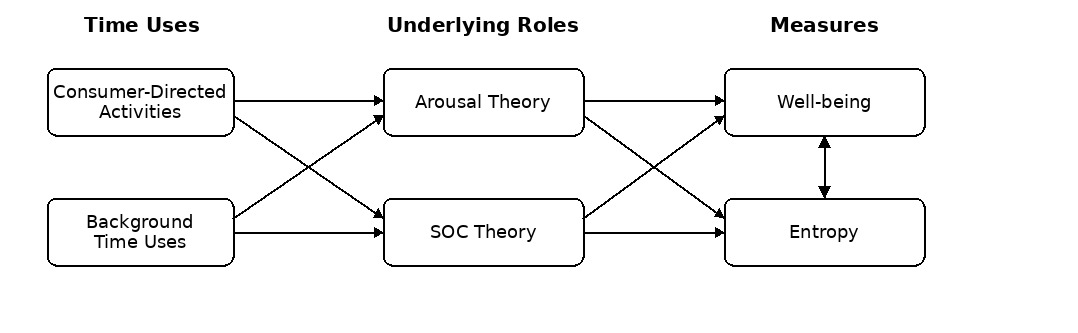
The conceptual model combines arousal theory with the Selection, Optimization, and Compensation (SOC) model (Baltes & Baltes, 1990) to consider how older adults allocate time and how these patterns relate to subjective well-being and behavioral structure. It addresses two gaps noted in the literature: inconsistent definition and description of aging consumers, and limited understanding of how behaviors change with age. By applying these perspectives to real-world time-use data, the model offers a theoretically grounded account of aging shopping behavior that can be connected to retailing.
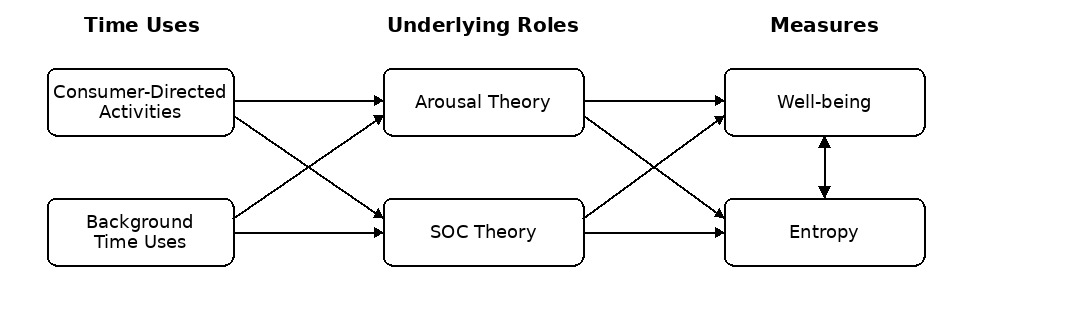
The model distinguishes two broad domains of time use: consumer-directed activities and background time uses. Consumer-directed time use consists of shopping for groceries and shopping for non-grocery items. These two American Time Use Survey (ATUS) categories directly reflect consumer behavior. Shopping may involve external stimulation and exploratory or social motivations, linking it to arousal and consumer engagement. For example, shopping typically occurs in store environments and may be shaped by social schedules, cultural expectations, and coordination with others (Baker et al., 2002).
Background time uses refer to internally regulated routines such as household tasks, sleep, eating and drinking, computer use for leisure, socializing, and religious attendance. These activities sustain daily functioning and can reflect adaptive strategies for managing time and energy across the lifespan. They are also socially structured. For example, socializing and religious attendance frequently reflect community schedules, cultural norms, and coordination with others (Dunbar, 2017). Social influences are embedded in the organization of both consumer-directed and background time uses.
Both domains are theorized to influence and be influenced by the mechanisms described in arousal theory and SOC. Arousal theory suggests that individuals seek an intermediate level of stimulation: low arousal can yield boredom and disengagement, whereas high arousal can lead to stress and overload; moderate arousal supports functioning. Consumer-directed activities, particularly shopping, often provide stimulation and novelty, while background uses can also shape arousal when complex, emotionally demanding, or coordinated with others (Donovan et al., 1994). These dynamics explain retail engagement patterns.
Subjective well-being is used in this model as a key outcome of arousal regulation and adaptive functioning. It is measured using the Cantril Self-Anchoring Ladder (Cantril, 1965; Diener et al., 2018), a validated measure in the ATUS Well-Being Module (2012 and 2021). Respondents rate their current life on a scale from 0 (worst possible life) to 10 (best possible life). This score captures life satisfaction and psychological flourishing, which are expected to peak when stimulation is balanced. Well-being also reflects broader patterns of psychological adjustment across time, making it an appropriate outcome for adaptive aging.
In addition to well-being, this study uses behavioral entropy as a complementary indicator of adaptive functioning. Entropy, originally from thermodynamics and formalized in information theory, measures unpredictability or diversity in a system. In daily behavior, entropy quantifies how evenly time is distributed across activities. It is calculated as:
Entropyᵢ = –Σ(pⱼ × log(pⱼ)),
where pⱼ is the proportion of time spent in activity j. High entropy indicates that time is spread relatively evenly across many different activities, often suggesting a flexible, varied routine. In contrast, low entropy indicates that time is concentrated in just a few activities, commonly reflecting a more rigid or repetitive pattern. For aging populations, moderate entropy may signal adaptive functioning, or balancing routine with enough variation to respond to changing needs and capacities (K. D. Bailey, 1990).
Entropy offers a rigorous way to characterize complexity and adaptation. Social Entropy Theory models social systems using variables such as population, information, and organization, proposing entropy as an indicator of development and stability (K. Bailey, 1994; K. D. Bailey, 1990). In economics, entropy-based models describe income distributions and market dynamics (Scharfenaker & Yang, 2020). Because entropy captures structure and variability without assuming equilibrium or linearity, it provides a general tool for theory building and empirical analysis across social science.
Psychographic segmentation frameworks such as VALS (Values, Attitudes, and Lifestyles) identify consumer differences based on psychological orientations, particularly experimentation and variety-seeking dimensions. Behavioral entropy captures how these orientations manifest in daily life. High entropy reflects varied activities and diverse time allocation; low entropy indicates concentrated, routine patterns. This connection suggests that VALS segments characterized by experiential values and variety-seeking may exhibit higher behavioral entropy, while routine-oriented or resource-constrained segments show lower entropy. Future research integrating psychographic profiles with behavioral time-use patterns might validate how psychological dispositions translate into observable consumer behavior.
Method
This study uses the American Time Use Survey (ATUS), a nationally representative dataset from the U.S. Bureau of Labor Statistics. The ATUS employs a stratified, probability-based design and gathers reports by computer-assisted telephone interview on how respondents spent each minute of the previous day. This approach yields time-diary evidence on daily behaviors. Data come from eight survey years: 2006, 2008, 2012, 2015, 2019, 2020, 2021, and 2023. These years span both stable and disruptive conditions—such as the Great Recession (2008) and the COVID-19 pandemic (2020–2021)—as well as relatively stable periods (2006, 2012, 2019, 2023), supporting cross-year comparisons in adaptation.
This study employs a repeated cross-sectional design. Each survey year samples different individuals, meaning the 65 to 74 age group in 2006 comprises different birth cohorts than the same age group in 2023. This design prevents separating age effects from cohort effects and period effects. The analysis documents age-group patterns across 2006-2023, rather than individual life course changes. Interpretations focus on cross-sectional differences and temporal consistency, acknowledging that patterns reflect the combined influence of age, cohort membership, and historical context.
The analysis compares three age groups: adults younger than 65, adults aged 65 to 74, and adults aged 75 years and older. This structure permits examination of midlife and later-life patterns in time use and psychological functioning. The sample is nationally representative. Across the eight survey years, 52 percent of respondents are female. The racial and ethnic composition includes 77 percent White, 12 percent Black or African American, 6 percent Asian, and 5 percent other races. Sixteen percent of respondents identify as Hispanic or Latino. The combined dataset includes 182,441 respondents across eight survey years: 134,086 adults under 65, 28,772 adults aged 65 to 74, and 19,583 adults aged 75 and older.
Time-use variables include two domains. The consumer-directed domain includes minutes spent shopping for groceries and shopping for non-grocery items, two categories recorded in the ATUS coding structure and directly relevant to consumer engagement and retail activity. The background (maintenance) domain covers routines that support daily functioning, including household chores, self-care, sleep, eating and drinking, and forms of leisure.
ATUS does not separately code online shopping. Activities such as browsing retail websites or placing online orders are coded in broader categories such as “computer use for leisure” rather than “shopping.” The shopping measures primarily reflect in-person retail visits. This limitation is particularly relevant for 2020-2021, when pandemic restrictions accelerated online shopping adoption and home delivery services expanded rapidly (Chen & Chan, 2014). The findings may underestimate total shopping engagement during these years. Future research integrating online and in-person shopping would provide more comprehensive accounts of consumer behavior during periods of digital transformation.
Two outcomes are examined. Subjective well-being is measured with the Cantril Self-Anchoring Ladder (Cantril, 1965), a validated single-item scale in the ATUS Well-Being Module (2012, 2021) where respondents rate current life from 0 (“worst possible life”) to 10 (“best possible life”).
Behavioral entropy also measures adaptive functioning. Entropy summarizes the evenness and diversity of time allocation across activities and is calculated for each individual with a variation of the Shannon formula:
Entropyᵢ = –Σ(pⱼ + 0.00001) × log(pⱼ + 0.00001),
where pj denotes the proportion of time spent in activity j; the small constant ensures the logarithm is defined when time in an activity is zero. Initially, all ATUS categories are considered; however, only 65 categories (including grocery shopping, non-grocery shopping, household tasks, leisure activities, and personal care) are sufficiently represented across individuals for meaningful estimation, so the summation is taken over these 65 categories.
Arousal theory and Selection, Optimization, and Compensation (SOC) guide the interpretation of shopping and other time-use patterns. Arousal theory suggests that diversification in time use can support optimal stimulation, and SOC considers the possibility that reduced entropy in later life may reflect adaptive narrowing and resource conservation. Entropy and well-being provide a basis for relating daily routines to psychological functioning and behavioral adaptation across age.
Findings
Overview
This study addresses two gaps: the inconsistent definition and description of older consumers, and the limited understanding of age-related change in everyday consumer behavior, particularly shopping and retail activity. The study applies arousal theory, which treats stimulation as central to psychological processes, and the Selection, Optimization, and Compensation (SOC) framework, which describes how older adults adapt across the life span. The findings are organized in six sections that connect time use, aging, and psychological adaptation in the conceptual model and indicate where implications for retailing arise.
The first section, Daily Time Use by Age Group, describes how time is allocated across fourteen activities. These descriptive patterns establish age-related specialization and diversity in time use and provide context for shopping across the day.
The second section, Shopping Patterns Across Years by Age Group, shows changes in grocery and non-grocery shopping over time. These results indicate behavioral consistency or variability in consumer patterns by age and historical context, setting up the entropy analysis and suggesting when retailers might expect steadier versus more volatile shopping participation.
The third section, Subjective Well-Being by Time Use and Age Group, examines differences in life satisfaction across the three age groups. It considers whether shopping relates to differences in reported life satisfaction.
The fourth section, Entropy Scores by Age and Year, examines how behavioral entropy varies across age groups and explores shopping time as a predictor of entropy. This analysis assesses patterns of behavioral diversity by age and how shopping behavior relates to adaptive functioning, providing insights relevant to retail strategies.
The fifth section, Shopping Time as a Predictor of Entropy and Life Satisfaction, considers whether shopping time is a meaningful predictor of entropy and life satisfaction. The final section, Entropy Versus Well-Being, compares the two indicators directly to assess which better captures behavioral adaptation with age. This comparison evaluates which measure is more sensitive to age-related differences relevant to shoppers.
The findings provide an integrated view of how shopping time use, well-being, and lifestyle structure interact across adulthood, and how these everyday behaviors reflect psychological theories of aging and influence retailing strategies.
Time Use by Age Group
Clear differences in daily time use emerged across age groups, as shown in Table 1. Adults aged 65 to 74 appeared to maintain the most active routines, engaging across a wide variety of domains. They heavily participated in essential household tasks such as interior cleaning and laundry, and also reported strong involvement in activities such as reading, religious attendance, and relaxing. Indeed, those aged 65 to 74 spent more time on each of these activities than did those under 65 years old. This age group demonstrated strong behavioral participation in both practical and reflective time uses, marking them as a highly active and transitional group.
Adults aged 75 and older displayed more selective time use, spending more minutes per day on television (spending 144.2 minutes per day compared to 95.1 for those under 65), resting, and sleeping. They spent the most time in religious attendance and reading. These patterns suggest deliberate investment in emotionally meaningful and restorative activities. For example, they spent more time on eating/drinking (71.6 minutes) than the other two groups. Eating and drinking may be an important avenue for them to experience meaningful forms of leisure that reflect earlier enjoyable experiences in life. For example, Dunbar (2017) found that meals of older adults enhanced feelings of closeness, happiness, and life satisfaction. This group continued to maintain involvement in core daily routines such as household work, though often at slightly reduced levels.
As Table 1 shows, younger adults (under 65) spent the most time in externally engaging activities, such as shopping for groceries and non-groceries, and socializing. They also spent more time using computers for leisure and reported the least time in reflective or inward-facing categories, such as relaxing and being involved in religious participation (7.6 minutes per day, compared to 10.5 minutes per day for those 65 to 74 and 14.2 minutes per day for those who are 75 and over).
These results point to age-differentiated patterns of time use, with the 65 to 74 group maintaining a particularly balanced and active structure. Rather than occupying a midpoint between younger and older adults, they often displayed the highest engagement, reinforcing their importance as an active and dynamic segment of the population.
Gender differences also emerge across shopping and household activities (analyses not shown). Women spend significantly more time in grocery shopping than men across all age categories: among adults under 65, women average 6.9 minutes daily versus 5.6 for men (t = 12.43, p < .001, Cohen’s d = 0.18); among those aged 65 to 74, women average 5.8 minutes versus 4.5 for men (t = 8.21, p < .001, d = 0.22); among those aged 75 and older, women average 4.5 minutes versus 3.4 for men (t = 5.67, p < .001, d = 0.19).
Non-grocery shopping shows smaller gender differences. Women allocate moderately more time than men in the under-65 group (6.2 vs. 5.5 minutes, t = 4.31, p < .001, d = 0.11), but differences narrow in older groups. Household tasks show gender stratification. Women spend 2 to 3 additional minutes daily on interior cleaning and laundry across all age groups (all p < .001), reflecting persistent gender roles in domestic labor even after retirement.
Behavioral entropy shows minimal gender differences across age groups (F = 1.82, p = .162), suggesting men and women maintain similar overall activity diversity despite different time allocation to specific tasks.
Differences Across Years
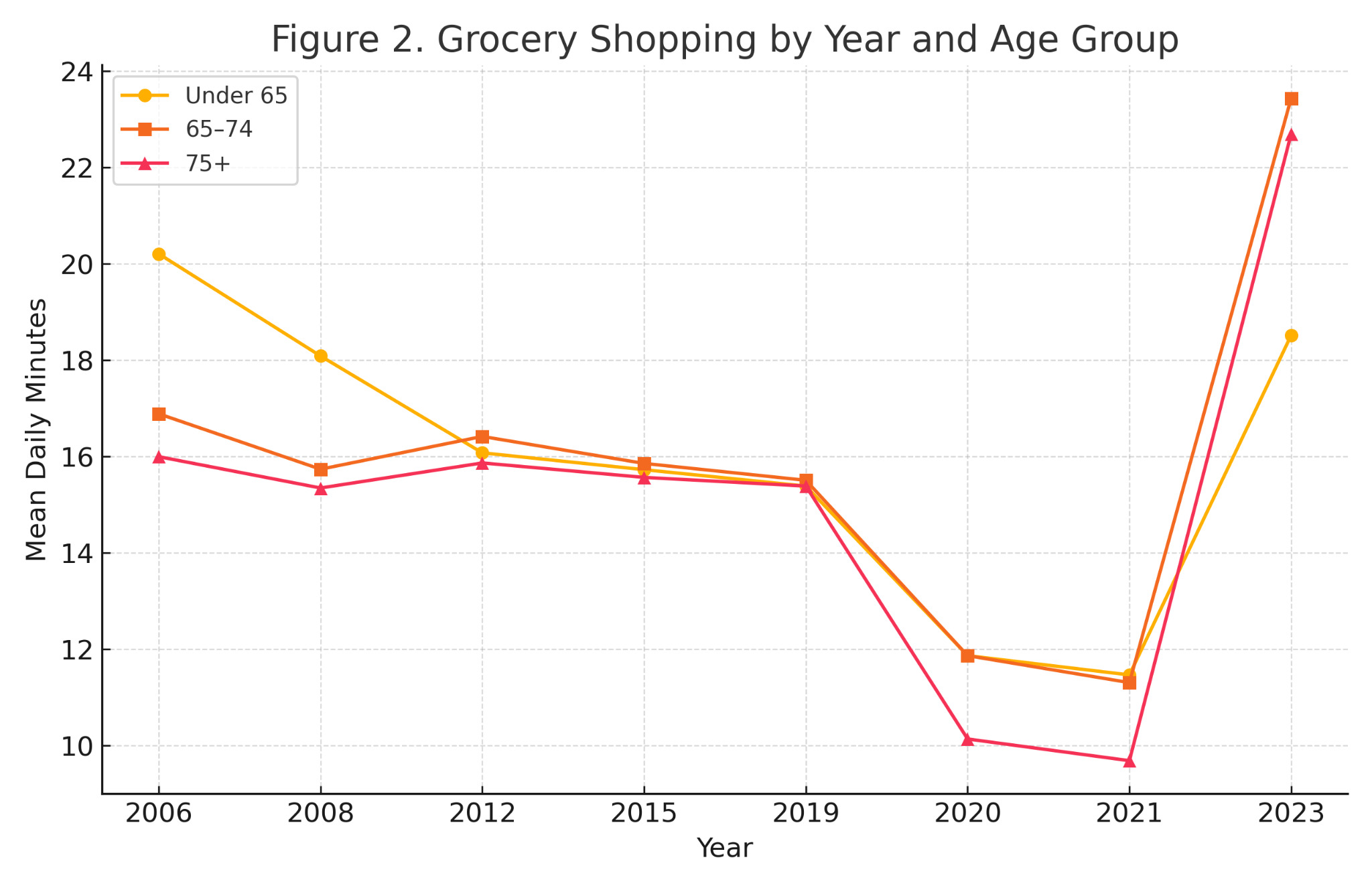
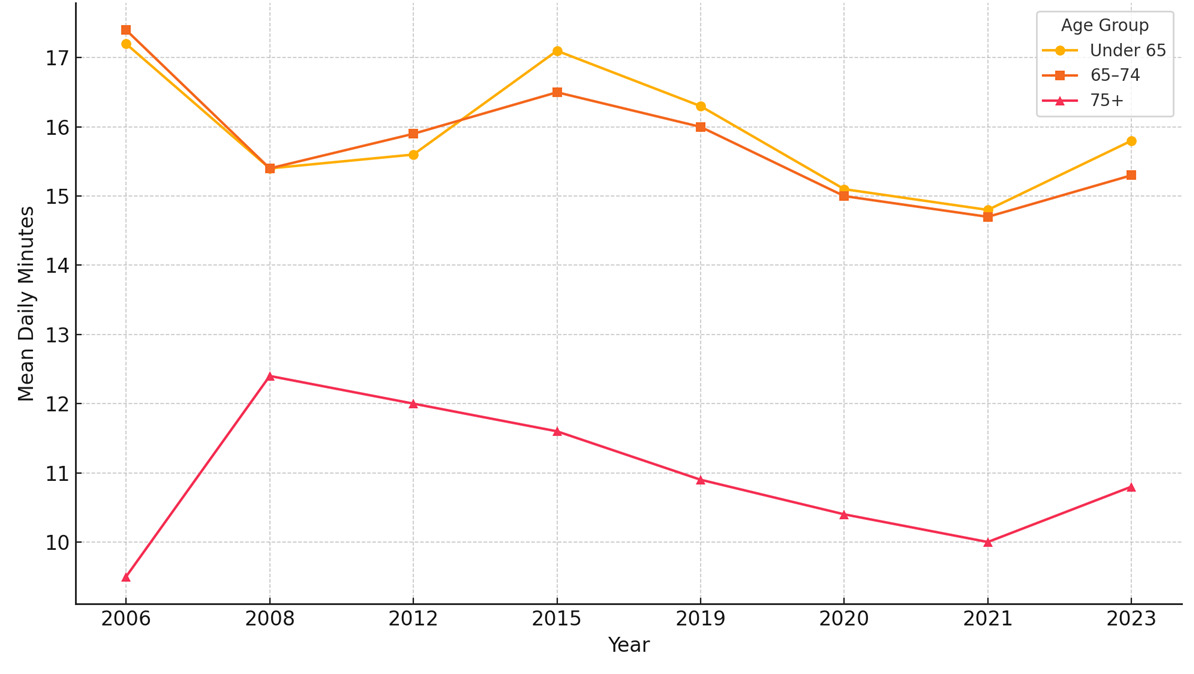
Time use across survey years (Figures 2 and 3) reveals distinct patterns, particularly during periods of major social and economic disruption. The COVID-19 pandemic in 2020 and 2021 prompted a significant reorganization of daily activities, most notably a reduction in social interaction and an increase in time devoted to health-related and home-based routines. Compared to earlier years, adults across all age groups, and especially those aged 65 and older, substantially reduced the time spent socializing and communicating. These declines likely reflect the widespread lockdowns and physical distancing measures that reshaped interpersonal engagement across the population. The data capture real-world behaviors at the moments individuals were making decisions, lending the findings strong external validity in assessing the pandemic’s impact, as well as other events, including the 2008 recession.
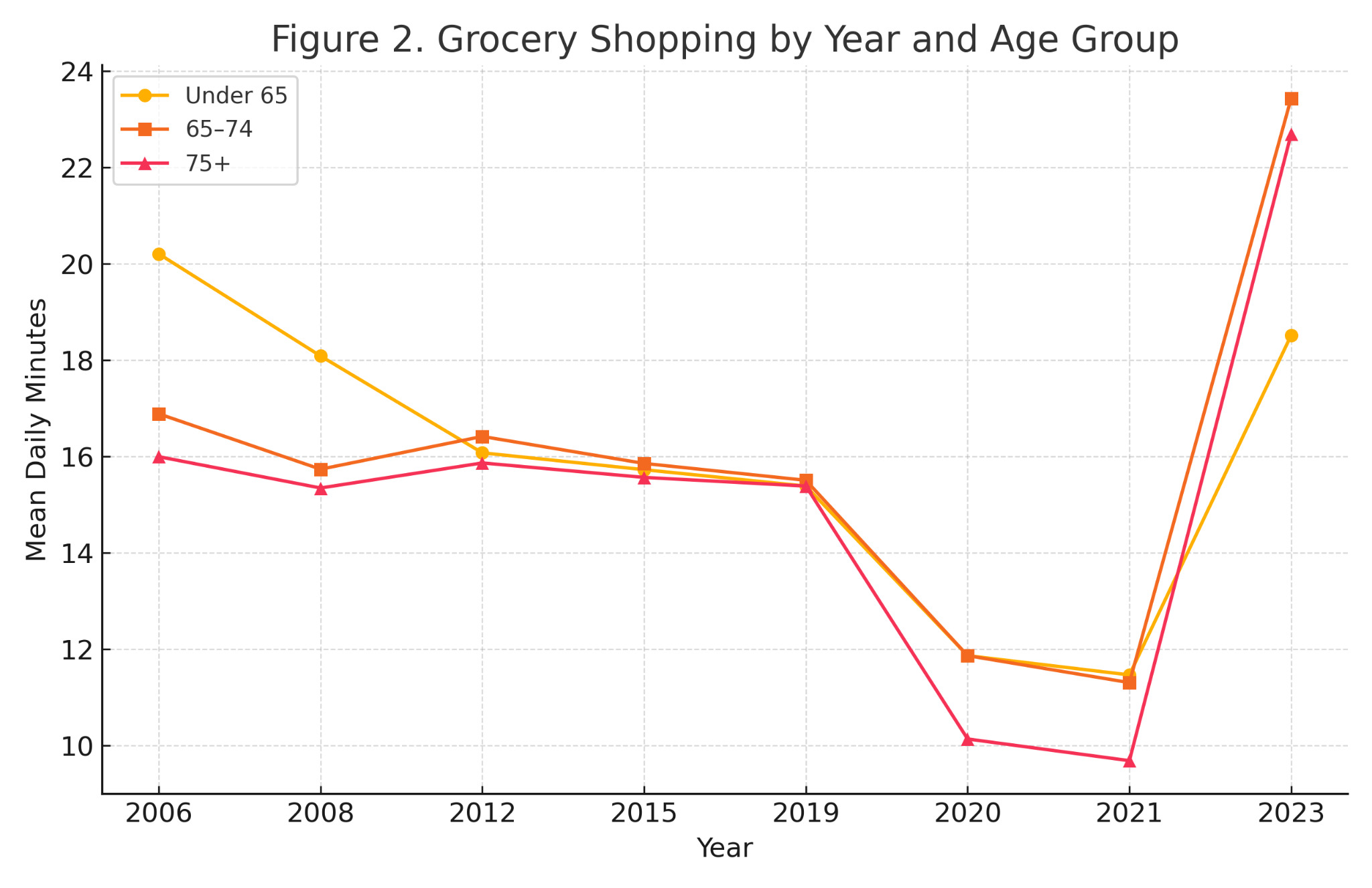
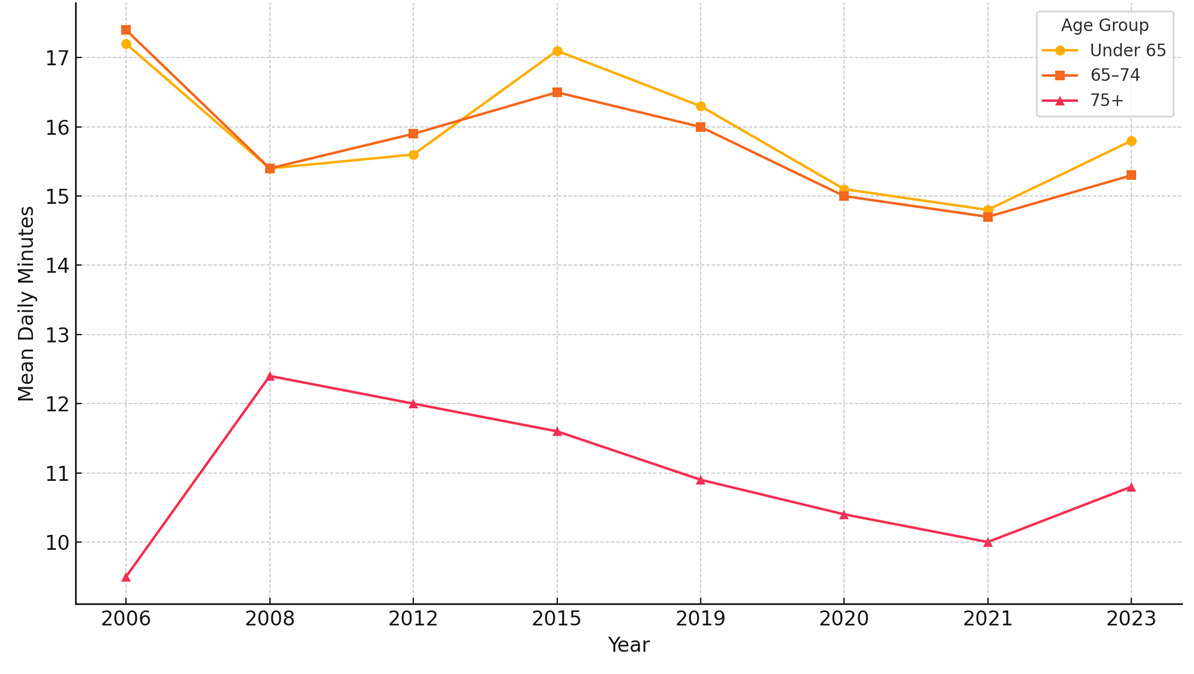
For example, in 2019, the year preceding the pandemic, older adults aged 65 to 74 and those 75+ reported high levels of time socializing. These data contradict stereotypes that portray older adults as socially withdrawn or disengaged. Instead, the pre-pandemic patterns suggest that older adults had vibrant, socially active lifestyles, potentially contributing to emotional and cognitive well-being. The abrupt decline in socializing during 2020 represents not just a behavioral change but a disruption of established, meaningful routines.
Grocery and non-grocery shopping also fluctuated across years. Periods of economic turbulence, such as the Great Recession and the pandemic, coincided with modest declines in reported shopping time. These changes likely reflect a mix of supply limitations, public health concerns, and adaptive behaviors, such as consolidated trips or increased reliance on delivery services. From a theoretical standpoint, these behavioral shifts suggest temporary constraints on both arousal-seeking and consumer engagement, particularly among older adults who may have prioritized safety over variety.
Patterns of time use in stable economic years, such as 2012 and 2015, appeared more consistent and balanced. These years function as behavioral baselines, where routines were less affected by external disruptions. Theoretical models of arousal and SOC suggest that individuals adapt their time use to sustain a sense of structure and personal control, especially during times of upheaval. In this context, the adjustments observed during 2020 and 2021 may reflect active compensation strategies, particularly among older adults, who often rely on routine and selective engagement to preserve psychological resilience.
Well-being Differences
Subjective well-being varied significantly across age groups, as shown in Table 2. Adults aged 65 to 74 reported the highest average life satisfaction (M = 7.63), followed closely by those aged 75 and older (M = 7.62), while adults under 65 reported the lowest average (M = 7.10). A one-way ANOVA confirmed that these differences were significant, F(2, df) = 233.29, p < .001, with a modest effect size (η² = .007). Post hoc Scheffé tests indicated that all three age groups differed significantly from one another (p < .001).
These findings suggest that older adults, particularly those 65 to 74, may experience a sustained or even enhanced sense of well-being in later life, challenging common assumptions about aging as a period of decline. This pattern is consistent with SOC theory: older adults selectively focus on meaningful goals, optimize their resources, and compensate for limitations.
Entropy Across Age Groups
Behavioral entropy exhibited a clear inverted U-shaped distribution across age groups. Entropy scores in this dataset ranged from approximately 0.42 to 0.56, where higher values indicate greater behavioral variety and flexibility. Adults aged 65 to 74 had the highest average entropy (M = 0.56), followed by those under 65 (M = 0.52), and adults aged 75 and older (M = 0.48). These differences were significant (p < .001), suggesting that midlife and early older adulthood may represent a peak in daily behavioral diversity.
To understand what drives this variety, the analysis examined whether consumer-directed behavior, specifically shopping time, predicts entropy and subjective well-being. Table 3 presents a comparison of how total shopping time predicts both Cantril life satisfaction scores and entropy. While total shopping time was a statistically significant predictor of both outcomes, the effect was substantially stronger for entropy (F = 42.67, p < .001, partial η² = .037) than for Cantril scores (F = 4.21, p = .041, partial η² = .005), suggesting that entropy is more sensitive to indicators of shopping behavior.
This research examines whether these effects vary by age group. Since behavioral adaptation may follow different patterns across the lifespan, age-stratified GLM models were estimated with grocery shopping, non-grocery shopping, and total shopping time as predictors of entropy. Table 4 presents GLM results for entropy predicted by grocery, non-grocery, and total shopping, stratified by age group. Post hoc comparisons were conducted in the earlier well-being section to clarify age group differences. Here, though, entropy was modeled using age groups in the analyses to examine behavioral predictors within each group. Among adults aged 65 to 74, all three shopping measures significantly predicted entropy, with the strongest effect observed for total shopping (F = 22.14, p < .001, partial η² = .031). For adults under 65, grocery shopping was the strongest predictor (F = 18.32, p < .001, partial η² = .026), while for those aged 75 and older, the effects were smaller but still significant. These results reinforce the idea that behavioral entropy is a meaningful and age-sensitive indicator of adaptive functioning and engagement.
Shopping as a Predictor of Entropy
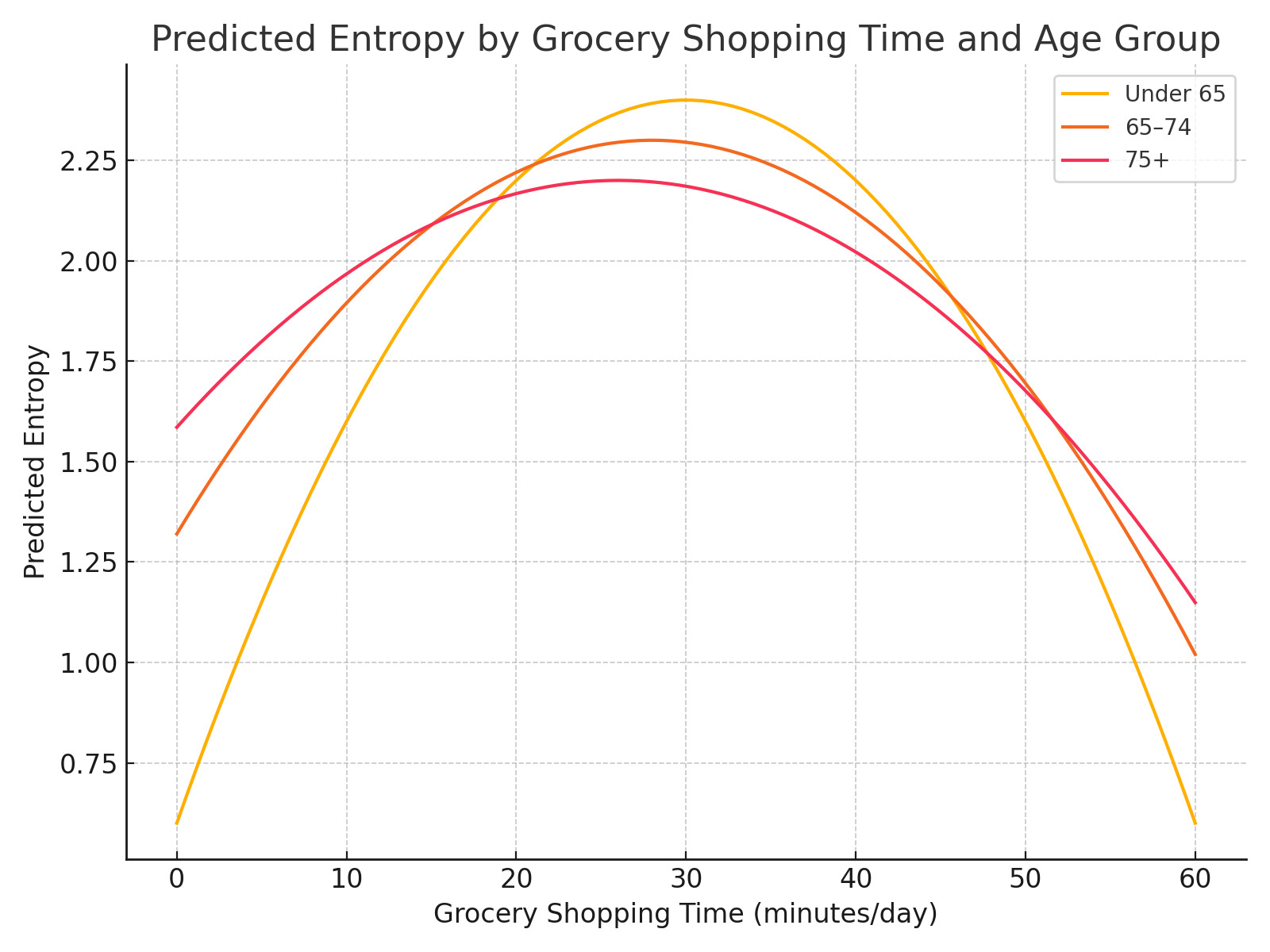
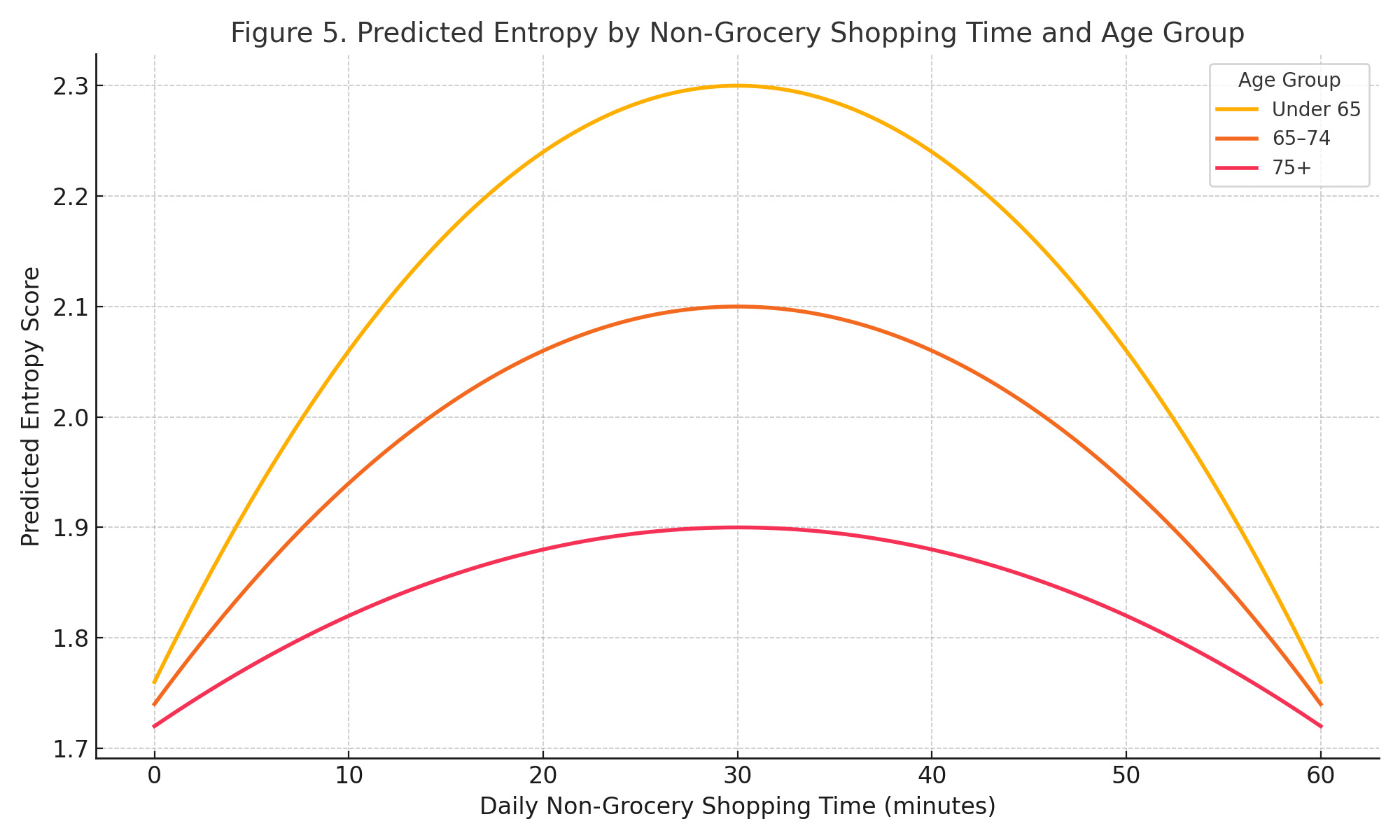
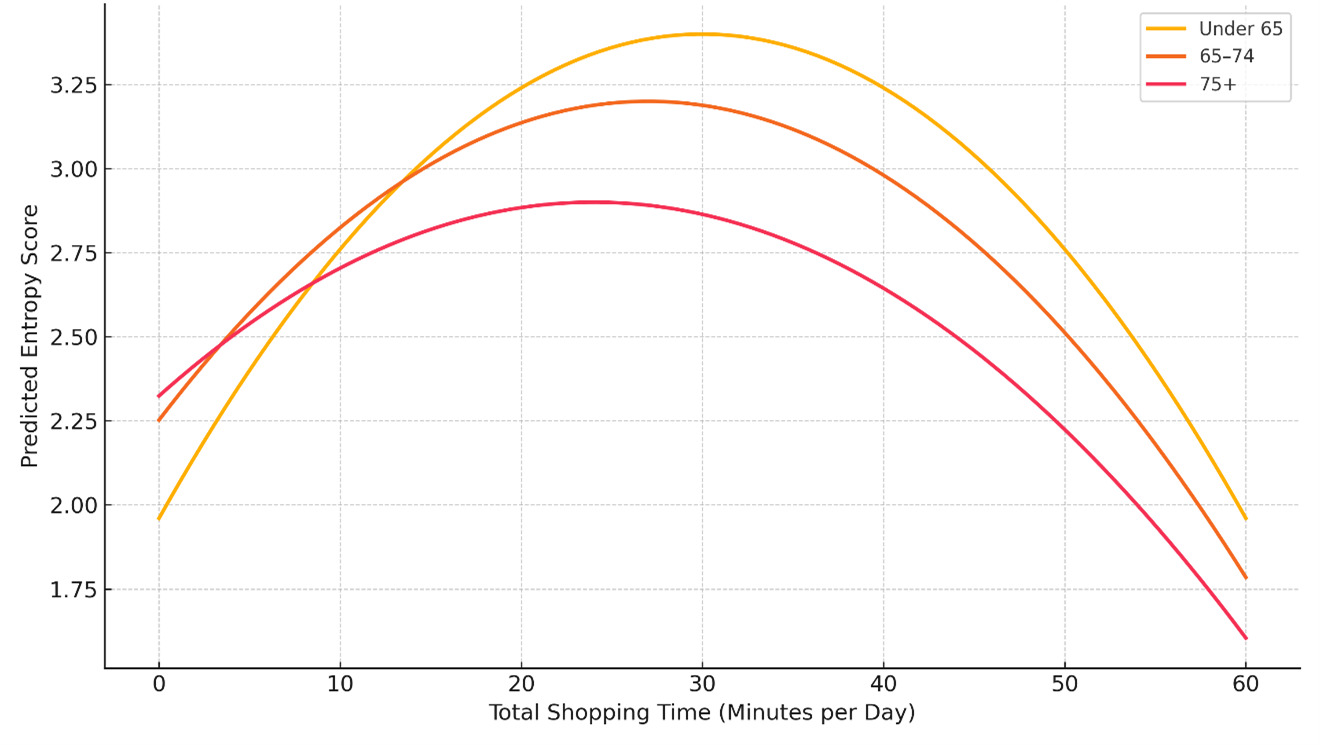
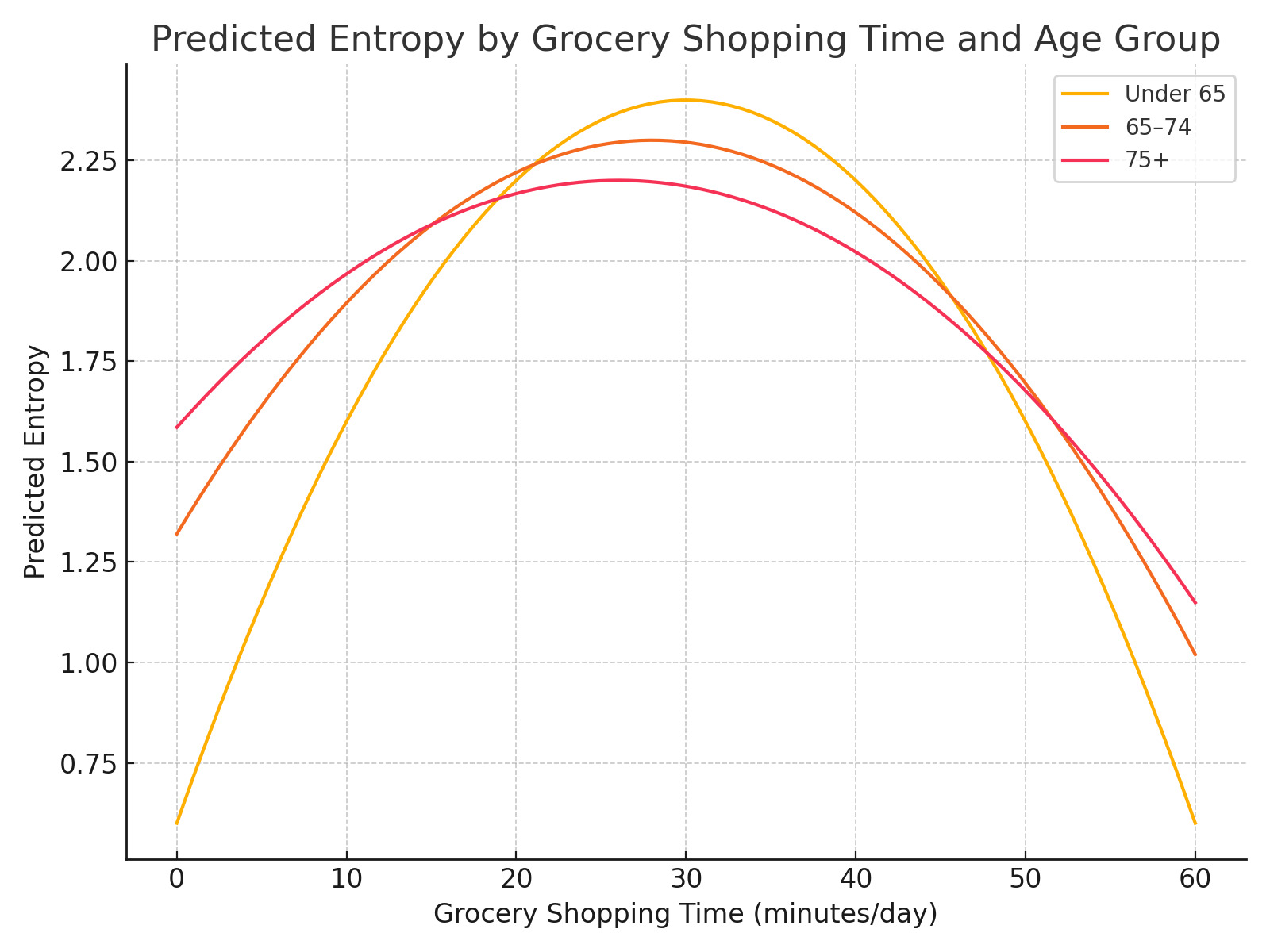
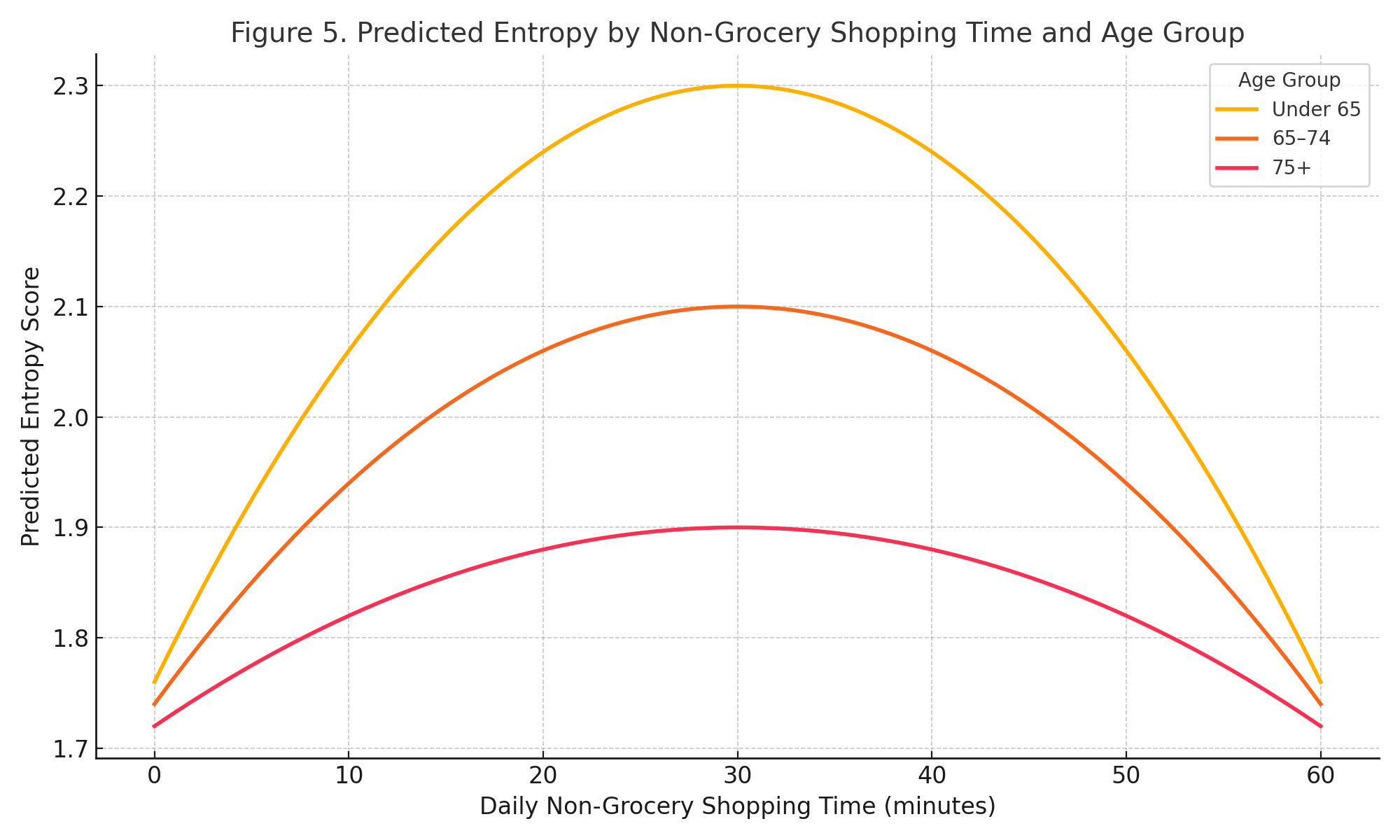
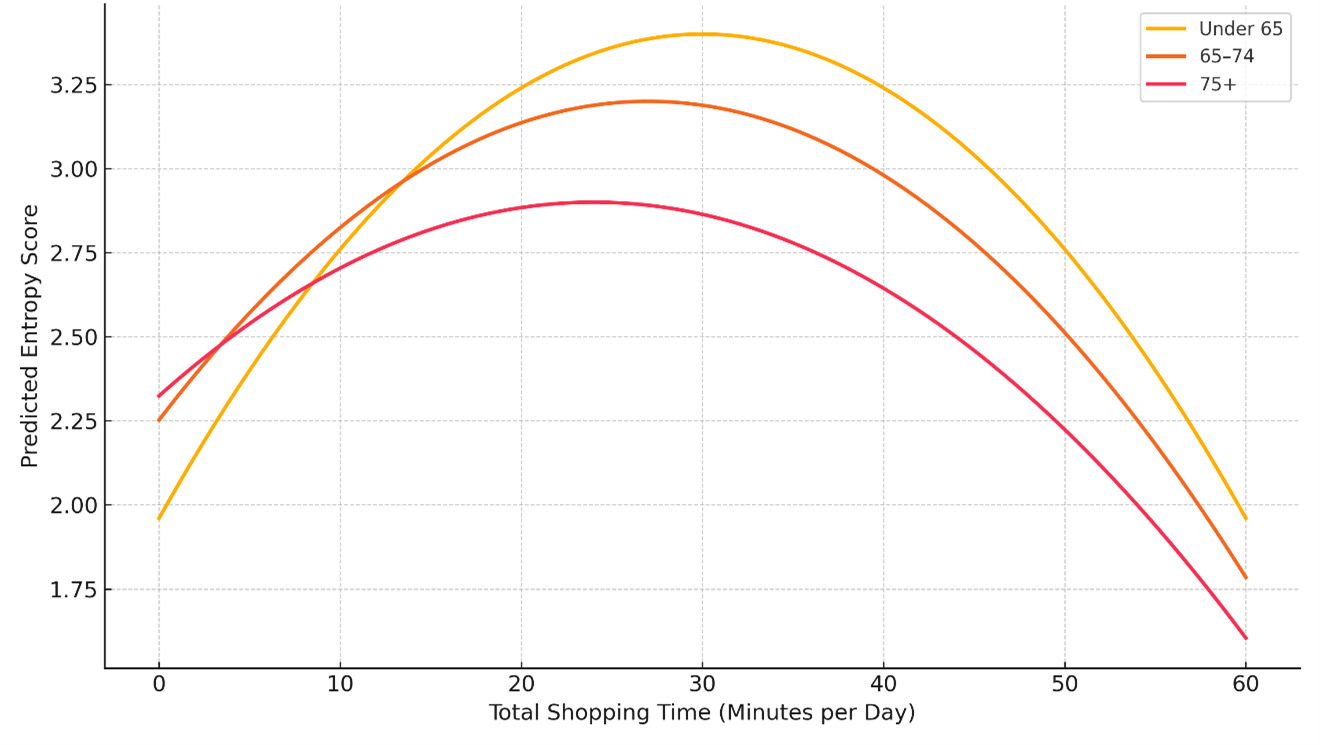
Across models, shopping minutes are associated with entropy, and quadratic fits are observed across grocery, non-grocery, and total shopping in all age groups, with the strongest patterns for ages 65 to 74 (Figures 4-6). With strong consistency for each type of shopping behavior, moderate daily shopping minutes correspond to higher entropy, whereas very low or very high minutes correspond to lower entropy.
Shopping as a Predictor of Life Satisfaction and Entropy: Integrative Analysis
Among respondents who assessed their well-being (2012 and 2021), regression analyses showed weaker but still statistically significant links between daily shopping time and Cantril life satisfaction scores. Table 5 provides the findings for Cantril’s life satisfaction, and entropy. Non-grocery shopping had the strongest effect, particularly among adults aged 65 to 74. Although shopping was not as strong a predictor of well-being as of entropy, its role in fostering agency and autonomy among older adults may account for the observed significance.
These findings provide further support for shopping as a lifestyle-enhancing activity. The integrative analysis supports the dual role of shopping in promoting both behavioral diversity (entropy) and subjective well-being. Consumer-directed activities appear to enhance the quality of life for older adults.
Entropy and Well-being Linkage
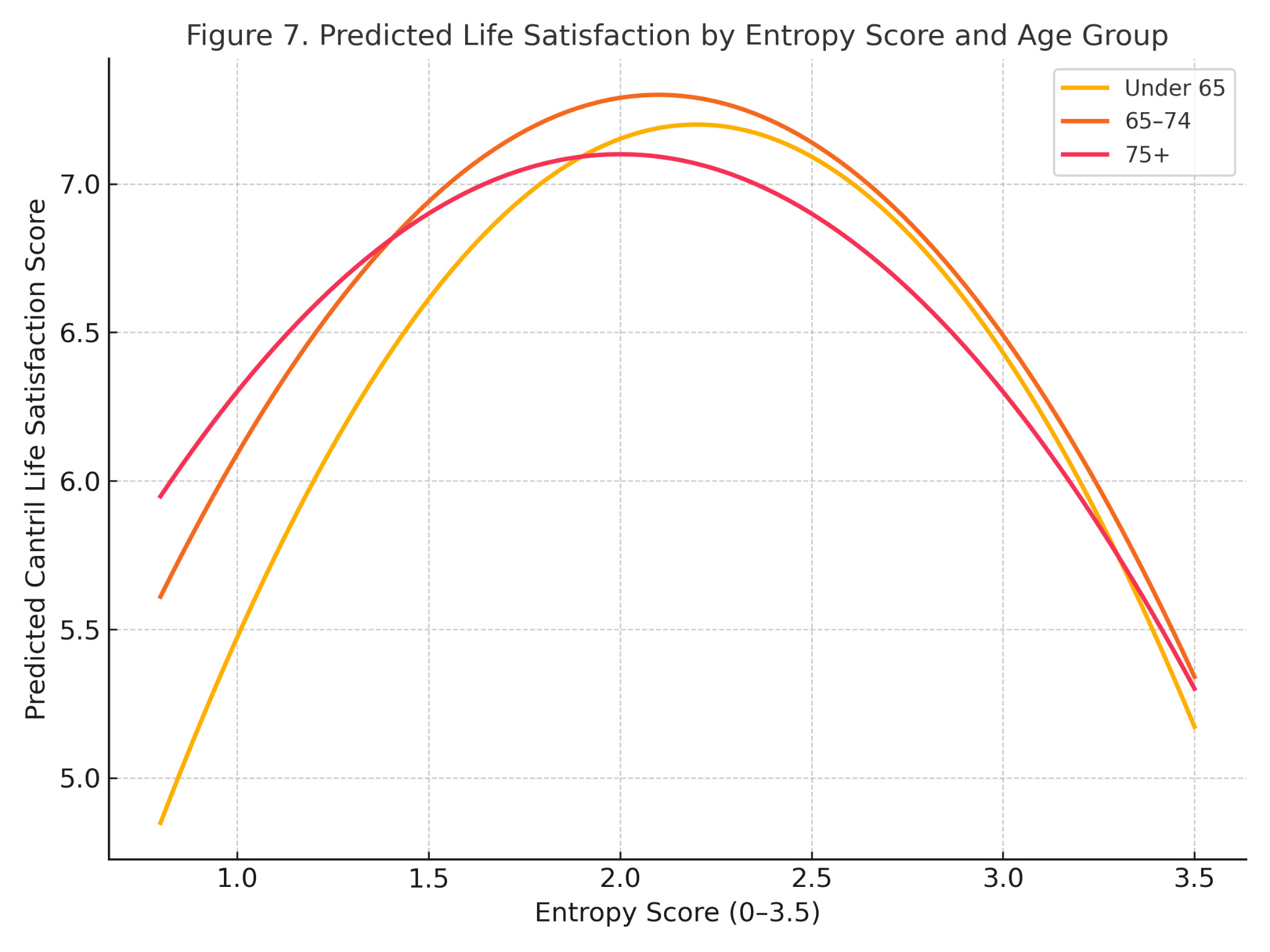
Entropy and life satisfaction are positively related (Figure 7). Considered with the shopping results above, this pattern supports viewing shopping within the broader organization of daily activities.
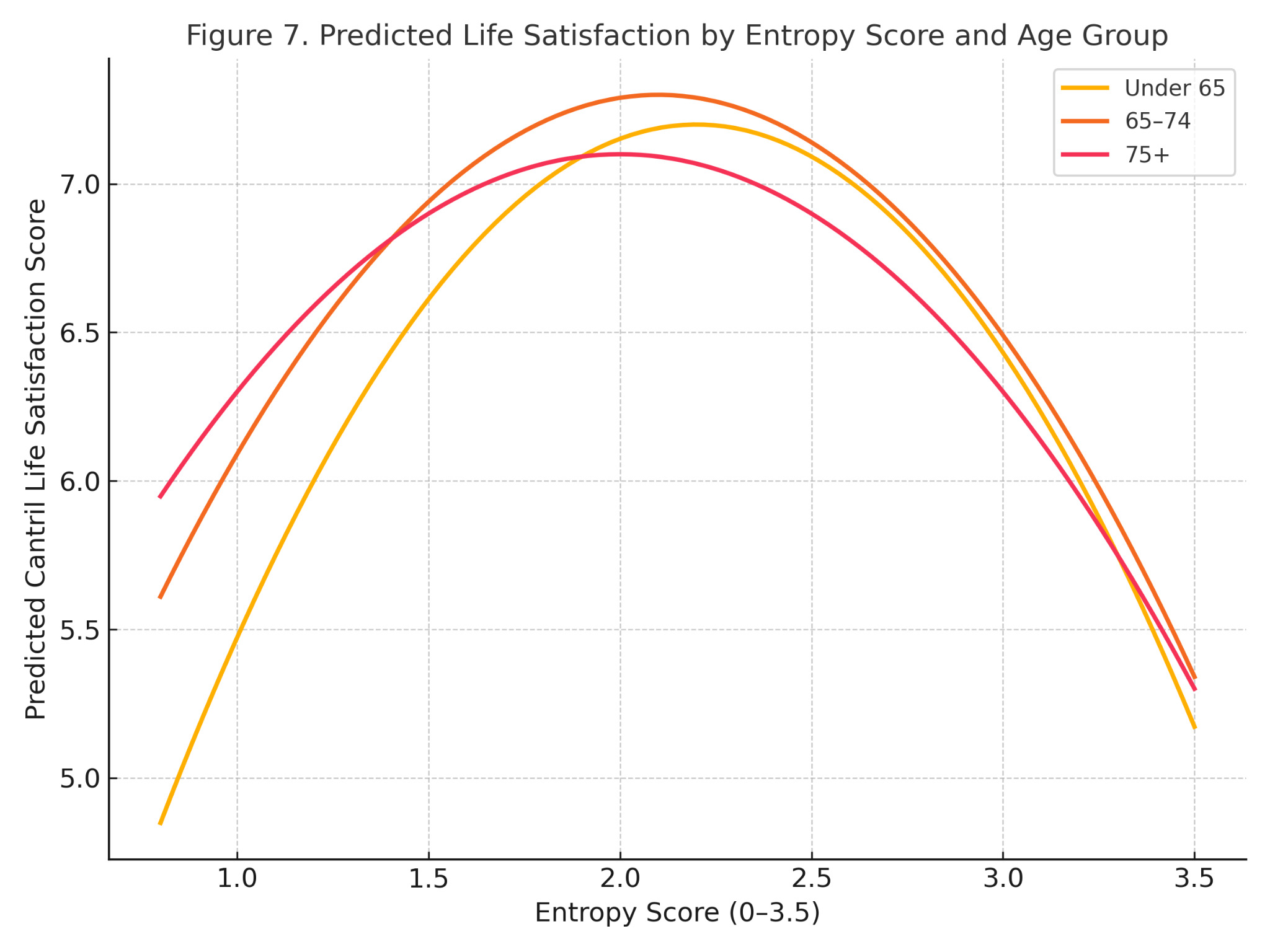
The strength of this association supports theoretical models linking lifestyle diversity with cognitive stimulation, autonomy, and emotional satisfaction. These findings underscore the value of entropy as a distinctive behavioral indicator in consumer aging research. The results support the importance of promoting diverse and engaging daily routines to enhance well-being among older adults.
Entropy scores are positively associated with Cantril well-being ratings. This finding suggests that greater daily behavioral variety may support psychological well-being, particularly among older adults who can balance structured and spontaneous activities. The strength of this association supports theoretical models linking lifestyle diversity with cognitive stimulation, autonomy, and emotional satisfaction. These findings underscore the potential value of entropy as a strong behavioral metric in shopper aging research.
Discussion
This study addresses two research gaps: the inconsistent definition of aging consumers and the limited understanding of how consumer behavior changes with age in everyday contexts. By analyzing eight years of nationally representative time-use data, this research provides findings that challenge conventional wisdom about older shoppers while offering theoretically supported guidance for retail strategy. The findings reveal six key contributions for both marketing theory and retail practice.
Theoretical Contributions and Retail Strategy Implications
Strong Consistency Across Shopping Types: A Foundation for Unified Retailing Strategy
One finding is the consistency between grocery and non-grocery shopping behaviors across all analyses. Both shopping types showed nearly identical patterns in their relationships to behavioral entropy, life satisfaction, and age-related changes. This consistency has important implications that challenge existing retailing assumptions.
This finding suggests that shopping, regardless of product category, serves similar psychological functions for older adults. Both grocery and non-grocery shopping appear to provide cognitive engagement, social interaction opportunities, and meaningful routine structure. The marketing literature often treats these shopping types as fundamentally different consumer experiences requiring distinct theoretical frameworks (Kohijoki, 2011; Pantano et al., 2022).
For retail strategy, this consistency suggests that retailers should not treat grocery and non-grocery shopping as requiring fundamentally different approaches when serving older shoppers. Instead, both types of retailing can benefit from similar design principles that support behavioral diversity. Store layouts that encourage exploration, clear signage that reduces cognitive load, flexible service options that accommodate varying mobility levels, and environments that support social interaction can enhance both grocery and non-grocery shopping experiences for older adults.
This finding also suggests opportunities for integrated retailing strategies. Retailers combining grocery and non-grocery offerings may be particularly appealing to older shoppers, creating shopping experiences that thoughtfully blend both categories while preserving the cognitive engagement and social opportunities each provides.
Behavioral Entropy as a Powerful Predictor: Beyond Demographic Segmentation
Behavioral entropy predicts shopping time far more effectively than life satisfaction across all age groups, with substantially larger effect sizes. This establishes entropy as a fundamentally important indicator of consumer engagement not captured by demographics or traditional psychological measures.
Entropy represents the underlying structure of daily life that shapes consumer behavior. Unlike demographic variables that describe who consumers are, entropy captures how they organize their time and energy—a behavioral quality that directly relates to their shopping engagement. The inverse U-shaped relationship between entropy and shopping time reveals that moderate behavioral variety corresponds to optimal shopping engagement, supporting arousal theory’s predictions about optimal stimulation levels.
Entropy offers potential for segmentation that moves beyond age-based categories (Cobb-Walgren et al., 2022). Retailers may develop behavioral profiles based on customers’ activity diversification patterns rather than simply on chronological age. High-entropy customers (those with varied daily routines) may respond well to diverse product offerings, complex store layouts, and novel shopping experiences. Moderate-entropy customers may prefer balanced environments that offer both familiarity and mild novelty. Lower-entropy customers may benefit from simplified, predictable shopping environments with clear routines and minimal cognitive demands.
The Inverse U-Shaped Curve: Optimal Stimulation in Retailing
The study found consistent inverse U-shaped relationships between shopping time and both entropy and life satisfaction. This pattern, for both grocery and non-grocery shopping across all age groups, provides strong empirical support for arousal theory’s core premise about optimal stimulation levels.
The finding suggests that shopping experiences must achieve a delicate balance. Too little shopping activity corresponds to lower behavioral diversity and reduced well-being, suggesting under-stimulation. Too much shopping activity also corresponds to lower entropy and well-being, indicating potential over-stimulation and inefficient time use. An optimal zone represents shopping experiences that provide meaningful engagement without overwhelming cognitive resources.
For retailing strategy: retailers should attempt to provide moderate levels of stimulation that engage customers without overwhelming them. This may translate to store layouts that offer clear navigation while encouraging exploration; product displays that provide variety without creating decision paralysis; service approaches that offer assistance without being intrusive; and timing strategies that avoid both under-stimulation (empty stores) and over-stimulation (crowding).
Adults 65-74 are Active
Another finding challenges conventional wisdom about aging and consumption. Adults aged 65-74 demonstrated the highest behavioral entropy, greatest shopping engagement across multiple analyses, and sustained high levels of activity across numerous life domains. This directly contradicts some stereotypes of older adults as withdrawn or declining consumers.
This supports SOC theory’s emphasis on selective optimization: the age group appears to have the resources and freedom to engage broadly across activities while maintaining the physical and cognitive capacity to do so effectively. For retailing strategy, this research suggests that 65-74 aged adults are a prime target for diverse, engaging retail experiences. The segment appears especially open to novel shopping experiences that provide variety and stimulation; loyalty programs that encourage exploration across product categories; retail environments that support social interaction and community building; and marketing approaches that emphasize active engagement rather than accommodation or simplification.
Older Adults Have Rich Social Lives and Well-Being
The study reveals that older adults, particularly before the COVID-19 pandemic, maintained vibrant social lives and reported higher life satisfaction than younger adults. The 75+ group, while showing some narrowing of activities, remained engaged in meaningful pursuits, including substantial shopping activity, extensive social interaction, and intentional time allocation to emotionally significant activities.
Theoretically, the finding challenges deficit models of aging that focus on decline and limitation. Instead, it supports theories of successful aging that emphasize continued growth, adaptation, and selective engagement with meaningful activities. The higher well-being scores among older adults suggest that aging can involve increased life satisfaction.
This finding also suggests that retailers should support social aspects of shopping that older adults clearly value. This could include re-designing stores to facilitate social interaction through comfortable seating areas, community bulletin boards, and gathering spaces; scheduling events and activities that bring customers together around shared interests; training staff to engage in appropriate social interaction that enhances the shopping experience; and creating retailing experiences that connect to broader community activities and social networks.
Entropy Predicts Shopping
Behavioral entropy proved to be a more sensitive predictor of shopping engagement than life satisfaction measures, with consistently larger effect sizes and stronger statistical relationships. This finding establishes entropy not just as an interesting metric, but as a practically important tool for understanding shopping behavior. For retail strategy, the findings about entropy suggest that behavioral patterns, rather than just stated preferences, may be important. In addition, more attention should be given to developing psychological theory underpinnings for entropy in shopping behavior.
Integration with Marketing Theory and Future Directions
These findings extend arousal theory by demonstrating its applicability to real-world consumer behavior across the lifespan. They support and refine SOC theory by showing how adaptive strategies manifest in actual shopping behaviors. They challenge age-based stereotypes in marketing by providing behavioral evidence of continued engagement and growth in later life.
The study also introduces behavioral entropy as a valuable construct. Entropy appears to capture some of the underlying behavioral organization that shapes shopping behavior. For retailing strategy, the findings suggest a fundamental shift from accommodation-based approaches to engagement-based approaches for older consumers. Rather than designing for perceived limitations, retailers should design for continued growth, exploration, and optimal stimulation. The consistency across shopping types suggests that unified approaches can be effective across diverse retail contexts.
The research interpretive scope requires clarification. The cross-sectional design prevents separating age effects from cohort and period effects. Adults aged 65 to 74 in 2006 (born 1932-1941) experienced different historical events, economic conditions, and socialization than those aged 65 to 74 in 2023 (born 1949-1958). Younger adults across survey years represent distinct generational cohorts with varied technology exposure and consumption norms. Observed patterns reflect age-related life stage differences, cohort-specific experiences, and period-specific conditions simultaneously. The study reveals robust age-group differences across temporal contexts rather than making causal claims about aging patterns.
Substantial heterogeneity exists within each age category. Income, wealth, education, health status, marital status, and household composition vary considerably among adults aged 65 to 74 and among those aged 75 and older. ATUS provides categorical income data allowing analysis of economic differences, and self-reported health measures are available in Well-Being Module years (2012, 2021). Economic security ranges from sole reliance on Social Security to substantial retirement assets. Health conditions span active independence to significant functional limitations requiring assistance. Living arrangements include living alone, with spouses, or in multigenerational households. These differences shape shopping access, time allocation, and adaptive strategies. Future research incorporating these available controls would clarify which patterns reflect aging per se versus resource constraints or health status.
Limitations and Future Research
Several limitations warrant consideration. ATUS does not separately measure online shopping, particularly consequential during 2020-2021 when digital retail expanded rapidly. Time-use measures capture duration but not trip frequency, expenditures, or purchase decisions. The Cantril ladder, while validated, provides a single-item global satisfaction measure available in limited years. Findings reflect U.S. consumers and may not generalize internationally. ATUS shopping categories depend on respondent classification, introducing potential measurement error as retail formats increasingly integrate grocery and non-grocery products.
Future research should pursue longitudinal designs to track individual changes in behavioral entropy and shopping engagement over time. Cultural variations in aging and consumption patterns warrant investigation across different societies and market contexts. The relationship between digital shopping behaviors and entropy represents an important area for future exploration.
Future research should also employ longitudinal designs tracking individuals across aging transitions. Analyzing available ATUS categorical income data and self-reported health measures would clarify how resources and health moderate age-group patterns. Studies distinguishing online versus in-person shopping are essential. International comparisons would assess generalizability. Research linking behavioral entropy with VALS could reveal how attitudinal orientations manifest in time-use patterns.
Conclusion
Older adults represent a behaviorally diverse, actively engaged consumer segment that challenges some conventional marketing assumptions. The consistency between grocery and non-grocery shopping behaviors, the relevance of behavioral entropy as a predictor, the evidence for optimal stimulation preferences, the peak activity of 65-74 year olds, and the sustained well-being of older adults collectively point toward a fundamental reframing of aging consumers in marketing theory and retailing practice.
Rather than viewing aging as decline requiring accommodation, the findings suggest viewing it as an adaptation requiring engagement. The theoretical framework combining arousal theory and SOC theory provides a foundation for understanding these dynamics and developing effective retailing strategies.
This study provides empirical evidence that older adults are not a homogeneous, declining market segment but rather a diverse, actively adapting segment that continues to seek meaningful, engaging consumer experiences throughout later life. Retailers who recognize and respond to this reality have significant opportunities to build loyalty for this economically important shopper.